Long haul flights and the risk of a DVT (Deep vein thrombosis/clot)

Written by Dr Robyn Baker on Tuesday, 14 May 2013. Posted in Vein Treatments

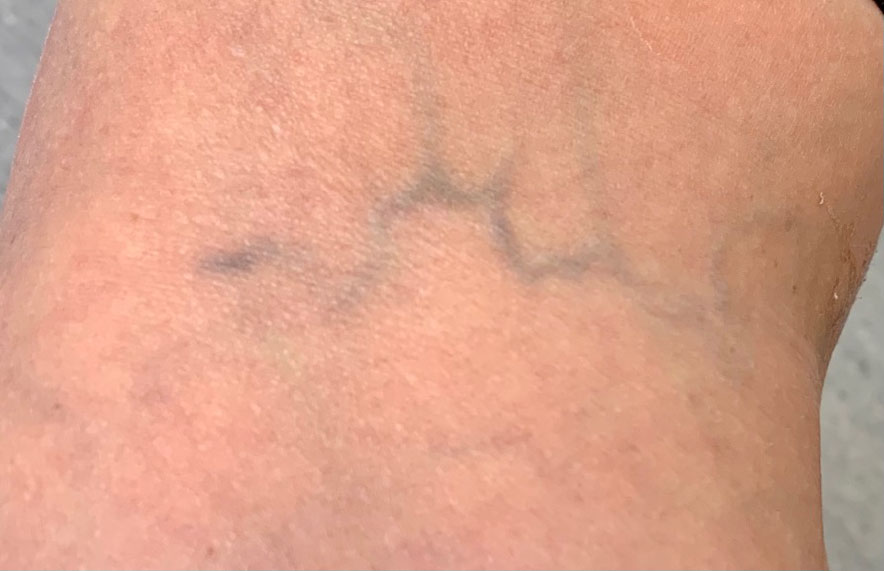
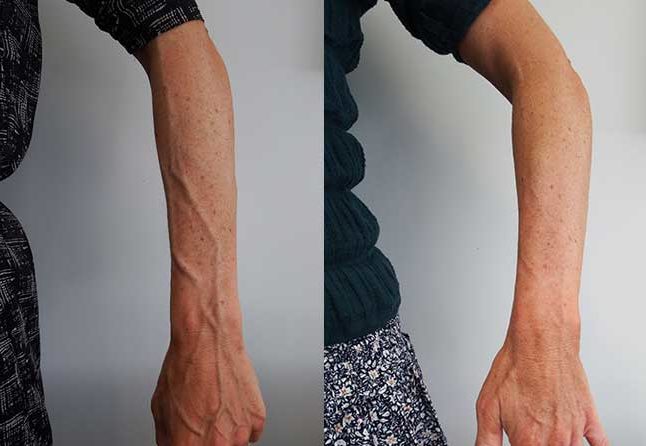
While not common (up to 10% in some reported studies), long haul flights ie. those over 4 hours, can increase any individual’s risk of developing a DVT. This is particularly so if someone is over 60 years of age, has significant medical problems, is pregnant, is using oestrogen containing medications or has varicose vein disease.

Another simple method of helping to reduce this risk, apart from drinking plenty of non-alcoholic and caffeine-free beverages and frequently getting up to walk around, is to wear compression hosiery. There is no evidence that Aspirin protects against developing a DVT.

Palm clinic offers a full range of comfortable, affordable flight socks that our experienced team will fit for you.


Venous Leg Ulcers

Written by Dr Rowan Stephens on Tuesday, 14 May 2013. Posted in Vein Treatments

Venous Leg Ulcers

Patients coming to Palm Clinic regarding their varicose veins are often concerned that they may develop a venous leg ulcer.

They recall an older relative "who used to have awful legs with ulcers, and I do not want that".

The most common causes of any lower leg ulcer are venous hypertension, arterial disease, neuropathy (often associated with diabetes), pressure injury and ischaemia (poor blood supply)

Venous leg ulceration is a debilitating chronic condition that affects people of all ages but is more common in those aged over 65.

It is generally considered to result from venous occlusion, incompetent calf muscle function or venous valve failure (varicose veins).

It is strongly related to risk factors such as a family history of previous surgery for varicose veins, venous disease, phlebitis, deep vein thrombosis (DVT) congestive heart failure (CHF), obesity, immobility and previous leg injury.

Prevention requires management of underlying venous disease using such modalities as are available at Palm Clinic including Endovenous Ablation and Ultrasound Guided Sclerotherapy.

Staff at Palm Clinic are also trained in the fitting of compression hosiery which is of benefit in both treatment and prevention of venous ulceration.

e-Dermastamp

Written by Lynette Alack, Beauty Therapist on Monday, 13 May 2013. Posted in Appearance Treatments

The NEW e-Dermastamp is the next evolution of skin needling. Manufactured by the Genuine Dermaroller™, backed by German medical engineering is the highest quality, electric, skin micro-needling device available. Dermaroller have spent an extensive amount of time perfecting this new system. In fact, the release date has been pushed back as results of comparative studies showed that fewer needles on the tip (not more) proved greater in perforation, and (unlike the competitor) resulted in no dragging, tearing or scratching.

So what’s different? Well the motor is NOT found in the headpiece, it is separate. This separation has given the system stronger motor and quicker perforations into the skin. With the competitor, holes are created 50 times per second; the e-Dermastamp can perform with more than triple the penetration at 150 times per second.

Dermaroller has always excelled in treating fine lines, wrinkles, extended scar formations, narrow acne scars and stretchmarks. However, a technical gap was noticed in treating isolated and difficult to access hard-to-reach places like the nose and upper lip, wrinkles (lips and crow’s feet), scars (e.g. chickenpox scars, post Liposuction scars, etc) and stagnant deep wrinkles. The e-Dermastamp will fill this gap and will exceed all expectations!

The e-Dermastamp uses a unique spring-loaded “stamp” with changeable needle tip cartridges. Identical to the Dermaroller the sterile needles are for single-use only. The controlled precision of both the Dermaroller and e-Dermastamp demonstrates a non-ablative technique that does not damage the skin nor is the epidermis removed. Furthermore, with no thermal heat, clients experience minimal downtime.

During an e-Dermastamp treatment micro needles enter the skin 50-150 times per second. For a fraction of this time the needle tips push the epidermal scales aside and enter into the skin. The nerve sensors sense this tissue intrusion and, in return, they signal to other cells in the vicinity of 1 to 2 mm around the channel that a “possible” injury has taken place. The nerve signals trigger a wound healing response and cell proliferation occurs.

This is not to supersede Dermaroller treatment, as studies have still proven that by rolling we create a “static” field of electrical signals needed to trigger regeneration mechanisms. The skin’s conductivity increases, while the skins electrical resistance decreases, allowing the cell to release growth factors which are received by dermal stem cells, creating up to 1000 times more collagen from just one treatment!

Best possible results will be achieved when combining both the Dermaroller and the e-Dermastamp. The Dermaroller is used to stimulate collagen for the entire face and the e-Dermastamp to smooth any isolated wrinkles and scar tissue within the skin, giving a 70-80% improvement in skin texture, tone, scaring, elasticity and the reduction of redness/rosacea and stimulating up to 1000 times more collagen, puncturing and smoothing scar tissue, creating new fibroblasts and new capillary networks (which has resulted in slowing down the degradation of the skin). Combining both the e-Dermastamp and the Dermaroller, doubles the amount of perforations in the skin, which provides a greater opportunity to infuse a cocktail of skin-enhancing ingredients simultaneously. This instantly makes the skin topically hydrated, smooth & glowing! Wait to see it with your own eyes, it’s the only way to be convinced.

The e-Dermastamp™ is fully CE certified as a medical device and it will provide the procedures you want, with superior results.


Lytera™ Brightening Complex

Written by Lynette Alack, Beauty Therapist on Monday, 13 May 2013. Posted in Appearance Treatments

Lytera™ Brightening Complex is the next generation skin brightening system that effectively addresses the appearance of skin discolouration and enhancing your skin’s luminosity.


What is unique about Lytera?

Lytera™ Brightening Complex uses innovation to deliver results! It incorporates a patented blend of ingredients that actively work together to gently exfoliate and help brighten and even skin tone by reducing the appearance of dark spots. This unique formula is free from hydroquinone and through a recently published clinical study, 85% of patients saw a greater improvement in their overall skin condition after 12 weeks of treatment, as compared to 68% of patients treated with 4% hydroquinone.


Lipoma treated with Liposuction

Written by Dr John Barrett on Friday, 10 May 2013. Posted in Liposuction

A lipoma is a benign fatty tumour which is essentially a bulge of fat tissue usually surrounded by a capsule.  They can occur anywhere on the body and normally look like a bulge above the skin.

Lipomas are generally easy to diagnose clinically by palpation but an ultrasound can help with the diagnosis.  Once diagnosed they can either be left alone as they are never anything more than a cosmetic issue.  However if you want to have a lipoma removed this can be performed either by cutting the lipoma out but this leaves a scar.  The alternative is liposuction which is performed via a tiny hole and is virtually scarless on completion .  The procedure is performed under a local anaesthetic.

If there is any suspicion that the lipoma could be anything other than benign a tissue sample can be sent to a laboratory for analysis.

What Does a Skin Biopsy Involve?

Written by Dr Martin Denby on Friday, 10 May 2013. Posted in General

Our skin cancer expert, Dr Martin Denby, performs skin checks for cancer using a special tool called a dermoscope. This detects early skin cancers much more effectively than simply looking at your skin. He will recommend a skin biopsy if he is concerned that a skin lesion might be cancerous.

A biopsy is the removal of a small piece of skin that is then sent to the laboratory for examination under the microscope by a specialist doctor called a histopathologist. To take a skin biopsy, first local anaesthetic is carefully injected under the skin. The pain level is no worse than a blood test. A small piece of skin is then removed either with a punch biopsy tool or a special shave blade, shown below:

With a punch biopsy tool a small 3-6mm circle of skin is removed, a single stitch is put in to hold the wound together and the stitch is taken out a week or so later. With a shave biopsy, the blade is used to shave the top layer of skin (epidermis) and the top of the layer beneath this (dermis). No stitches are needed. A dry dressing is applied, you are asked to keep it dry for 24 hours and you can then have a shower with the dressing on. Both biopsies usually heal very well leaving minimal, if any scarring.

Cryotherapy - Liquid Nitrogen

Written by Dr Martin Denby on Tuesday, 07 May 2013. Posted in General

What is Cryotherapy (Liquid Nitrogen)?

Liquid nitrogen is an extremely cold liquid used to treat skin lesions by freezing them. Sun damage, warts and some early or superficial skin cancers can be treated safely and effectively if used according to guidelines. It is applied in a fine spray using a cryotherapy gun like the one shown below.

Liquid nitrogen is -196.8C and freezes the skin cells to -50C. This forms ice within the cells, causing cell death. The liquid nitrogen is sprayed for 3-30 seconds depending on the skin lesion.

Using liquid nitrogen to make frozen desserts and cocktails at your table has become very popular in restaurants recently. Sadly we are not able to do this at Palm Clinic.

We ARE able to treat your skin lesions with liquid nitrogen at Palm Clinic.  We recommend an appointment with Dr Denby, our skin lesion expert to determine if it is the right treatment for you.

Skin Cancer Appointment

Written by Dr Martin Denby on Tuesday, 07 May 2013. Posted in General

Your Skin Cancer Appointment

Have you ever wondered what happens during a skin cancer consultation? Here’s how it goes at Palm Clinic.

Our skin cancer doctor, Dr Martin Denby, sees you for 20 minutes. He’s a highly experienced GP with extra qualifications in treating and diagnosing skin cancer. He is currently completing his Masters Degree in Skin Cancer Management at the University of Queensland.

First Dr Denby asks where you were born, if you had blistering sunburns as a child, if you or anyone in the family has had skin cancer, how you use sunscreen and whether you’ve noticed any moles changing, itching or bleeding.

He then examines your entire skin surface from head to toe. This means looking at your scalp, armpits, groins, buttocks and feet. It’s really important your skin check is this thorough: you’re being short changed otherwise. There’s no need to be embarrassed. You’ll get to stay in your underwear and he will provide you with privacy while undressing and a towel for dignity.

Dr Denby will look over your skin for any lesions then check each one thoroughly with a special skin microscope called a dermoscope. The dermoscope is the key to finding skin cancers early. Research shows that even the most highly trained experts can only diagnose melanomas with 60% accuracy with the naked eye. With a dermoscope however, accuracy increases to 90% or more. The dermoscope enables him to look beneath the top layer of the skin (epidermis) into the deep layer (dermis) to reveal telltale signs of early melanoma and other skin cancers.

If he identifies any skin lesions of concern, he will either do a biopsy or a complete excision depending on the situation. This is booked around a week later and takes place at Palm Clinic under local anaesthetic. Dr Denby is very skilled and gentle so the pain is no worse than a blood test.

Should there be a skin lesion that does not look completely normal under the dermoscope, but has a low index of suspicion for melanoma, Dr Denby will take a high-powered digital dermoscopic photograph of the lesion. He will then see you again in 3 months to re-photograph the lesion and look for any subtle changes on the dermoscopic images. If there are no changes, the lesion is over 99% likely to be benign. If there are any changes it can be excised.

Dr Denby recommends most people should have a skin check every 12 months. Detecting and treating skin cancers early makes a big difference to survival rates from NZ’s most common cancer.

Liposculpture for Ankles and Calves

Written by Dr John Barrett on Tuesday, 23 April 2013. Posted in Liposuction

View of calves and ankles before and after liposculpture

This woman had generalised heaviness of the lower legs with particular emphasis on the ankle area.  Liposculpture at Palm Clinic with Dr John Barrett has refined the lower legs by circumferentially reducing the amount of fat.  Special emphasis was placed on the problematic area around the ankles.

Fraxel Laser for Acne Scarring and Improved Skin Texture

Written by Clare Gallie RN on Tuesday, 23 April 2013. Posted in Laser Treatments

Fraxel Laser for Acne Scarring and Improved Skin Texture

Fraxel Dual laser was used in this patient for improvement of acne scarring and general skin texture.

Fraxel is a fractionated resurfacing laser which significantly reduces the risks and downtime with deep resurfacing of the skin.  This makes it the treatment of choice for deep remodelling of the skin and for collagen regeneration resulting in a significantly smoother skin profile.

Lip Lines and Lip Hydration

Written by Dr Sarah Hart on Tuesday, 23 April 2013. Posted in Appearance Treatments

Lip Lines and Lip Hydration with Juvederm

This lovely set of lips belongs to a patient of mine who is a very beautiful 45 year old woman. She began noticing early signs of aging around her mouth. She wanted to have her lips returned to their youthful state.

I used a syringe of Juvederm Ultra to ease out her lip lines, her smile creases and her chin crease. Smoothing out these surrounding lines returned the attention to her beautiful lips. To finish I put some thin threads of Juvederm Ultra into both her top and bottom lips to give her some extra hydration and structure to the body of the lip without making them look obviously enhanced. She was delighted with her result.

Rosacea Treated with Elos

Written by Clare Gallie RN on Tuesday, 16 April 2013. Posted in IPL

This patients rosacea has been treated with Elos IPL with good improvement in the facial veins. Most rosacea patients require at least two to three treatments to attain this level of clearance.

Treatments with medical grade Elos are generally spaced 4-6 weeks apart to allow all inflammation from the first treatment to settle.

The freckles have also improved with the same treatment.

Liposculpture to Abdomen with Stretchmarks

Written by Dr John Barrett on Tuesday, 16 April 2013. Posted in Liposuction

When considering patients for liposuction or liposculpture skin tone is an important factor to consider.  Generally those with poor skin tone do not so well as the skin does not retract as well as those with good skin tone.

Stretchmarks can be a good indicator of skin tone and these generally show with rapid growth, rapid weight gain and/or pregnancy.

In this patient the stretchmarks were very apparent after pregnancy.  Despite this she has had a very good result from liposculpture.  Of course the stretchmarks remain but the contour is much more pleasing.

Natural results with Dermal Fillers

Written by Clare Gallie RN on Tuesday, 09 April 2013. Posted in Appearance Treatments

Natural results with Dermal Fillers

Dermal fillers placed in the cheeks, nasolabial folds and oral commissures along with a lip enhancement have all halped to subtly rejuvenate the face.  There has been an emphasis on natural results.

Varicose Ulcer healed with Vein Laser Treatment

Written by Dr John Barrett on Monday, 08 April 2013. Posted in Vein Treatments

Varicose Ulcer treated with Vein Laser

This patient had a varicose ulcer for 4-5 months prior to treatment.  Varicose ulcers are generally treated by compression hosiery and regular dressings but very often they do not heal until the underlying varicose vein has been treated.  This then improves venous circulation which in turn reduces oedema in the tissues and clears tissue toxins more effectively.

The photos show complete resolution of the varicose ulcer.